
PROMPT-TO-PRODUCTPHYSICAL AIHUMAN-ROBOT INTERACTION
Unleashing Creativity with AI and Robots
Describe it. Design it. Build it.
From an abstract idea to a physical object—designed, planned, and built autonomously by robots.
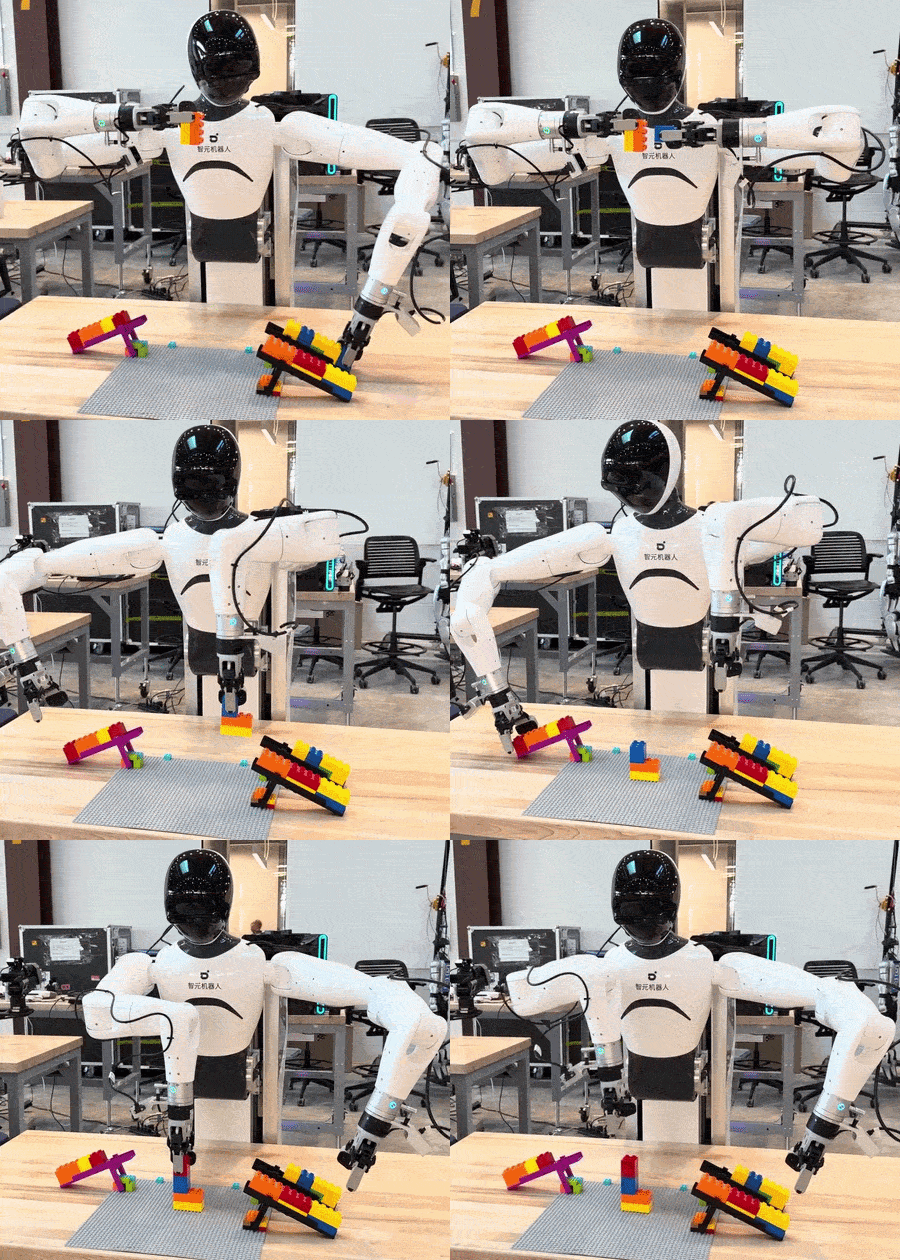
WHY IT MATTERS
Physical intelligence should do more than follow instructions
We envision Physical AI as a creative partner: one that interprets human ideas, reasons about the physical world, designs and refines actionable plans, and orchestrates robots to transform those ideas into useful objects.
Realizing this vision requires more than generating text, images, or 3D assets or executing simple pick-and-place tasks. Designs must be physically feasible, manufacturable, and ready for autonomous execution; robots need the intelligence, precision, and dexterity to realize them reliably in the real world.
MILESTONE RESULTS
Human imagination, made physical
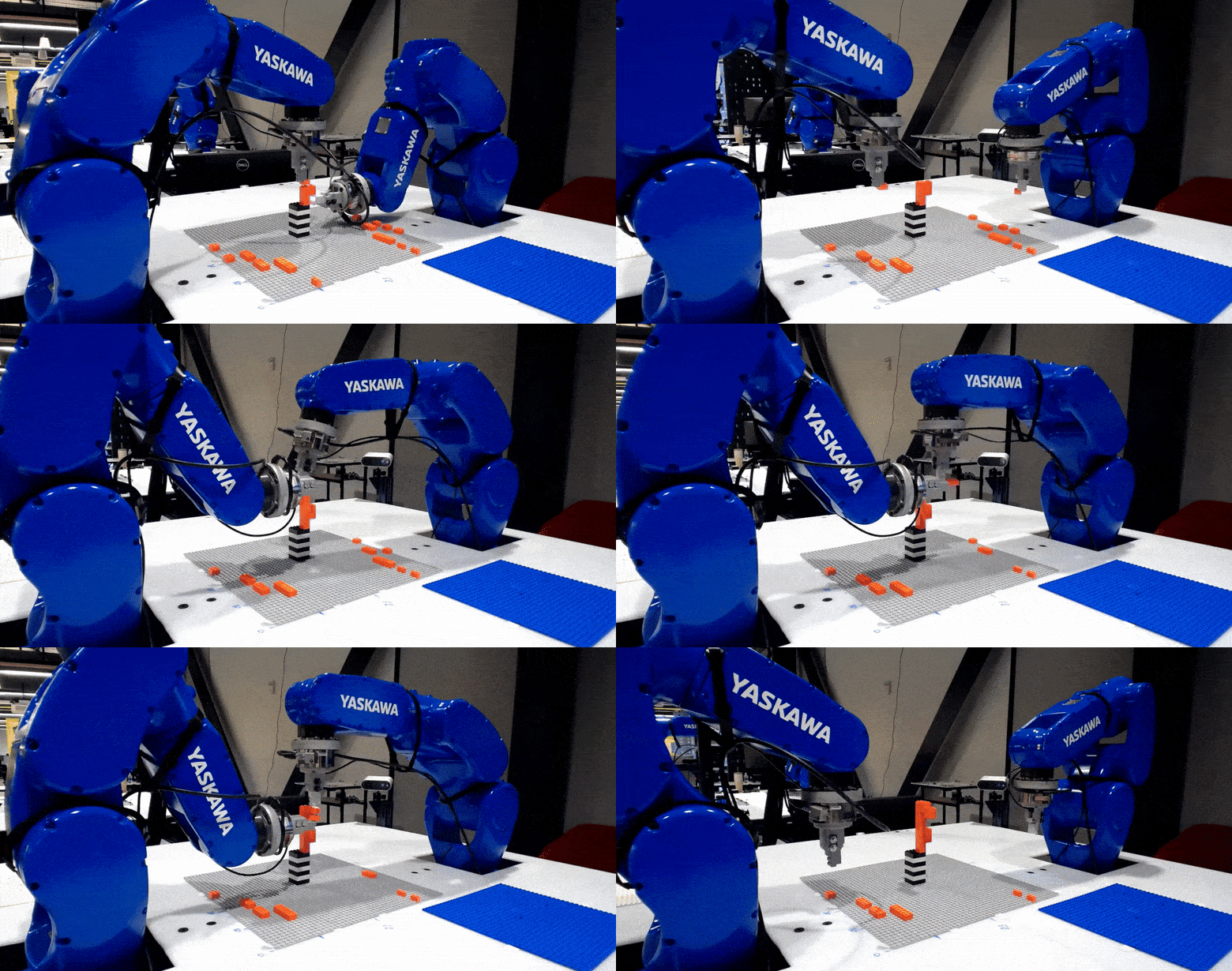
We present Prompt-to-Product, an end-to-end Physical AI system that turns an idea expressed in natural language into a robot-built object. It generates a buildable design, validates its structure, plans hundreds of operations, selects the required manipulation skills, and executes the assembly autonomously—brick by brick.
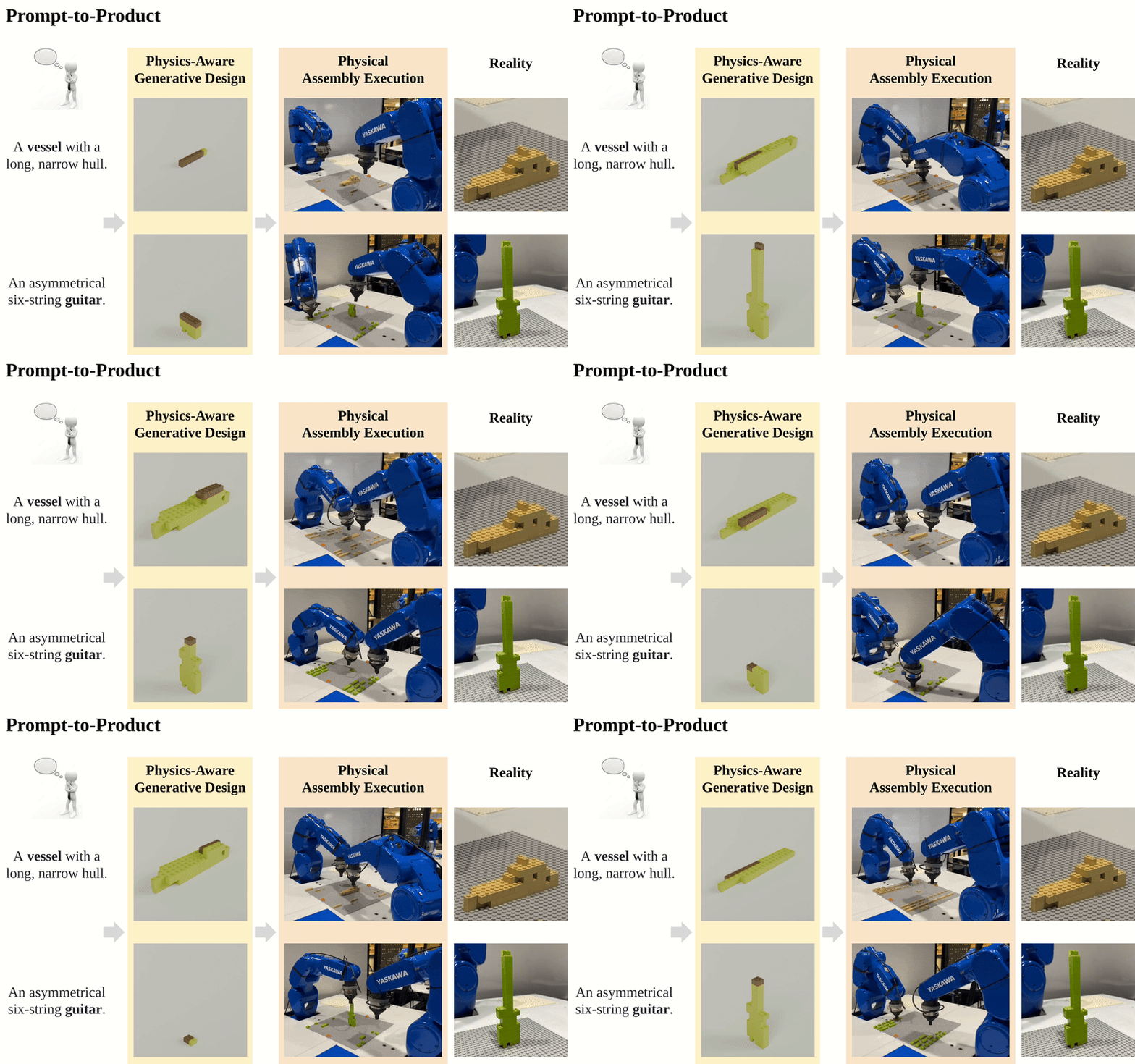
Watch the idea become reality
One system, four layers of intelligence

-
[J41] Prompt-to-Product: Generative Assembly via Bimanual Manipulation
Ruixuan Liu, Philip Huang, Ava Pun, Kangle Deng, Shobhit Aggarwal, Zhenran Tang, Michelle Liu, Deva Ramanan, Jun-Yan Zhu, Jiaoyang Li and Changliu Liu
IEEE Robotics and Automation Magazine, 2026
RESEARCH AREAS
The science powering Physical AI
Creative Physical AI demands intelligence across the entire pipeline: from generative models and physical reasoning to perception, planning, learning, and manipulation.
Physics-Aware Reasoning
Can Physical AI distinguish visual plausibility from physical stability?
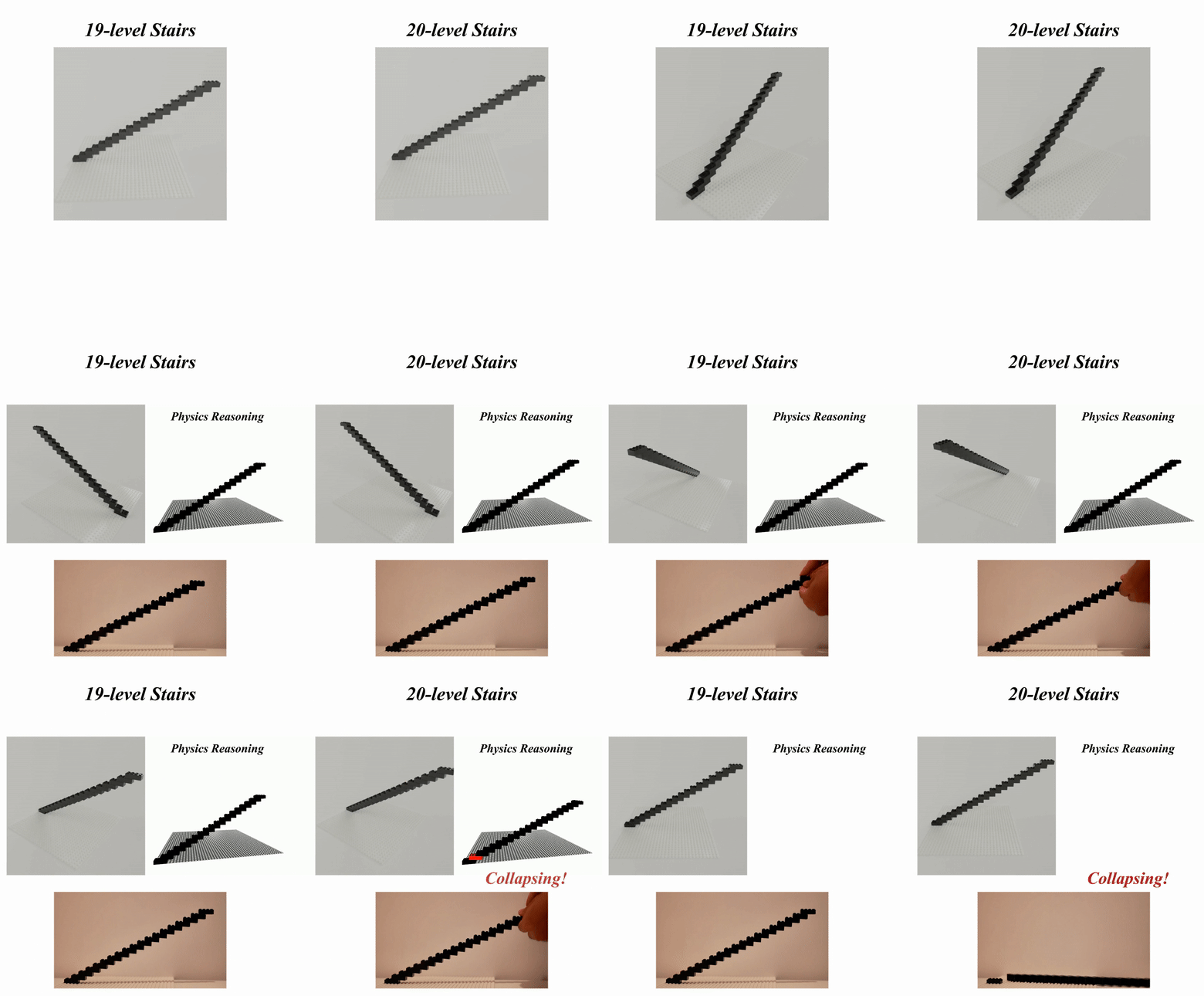
We build computational tools and simulators that predict how complex assemblies connect, stand, and fail in the physical world.
-
[J27] StableLego: Stability Analysis of Block Stacking Assembly
Ruixuan Liu, Kangle Deng, Ziwei Wang and Changliu Liu
IEEE Robotics and Automation Letters, 2024
StableLego provides data and analysis tools that predict whether complex brick structures will stand or collapse.
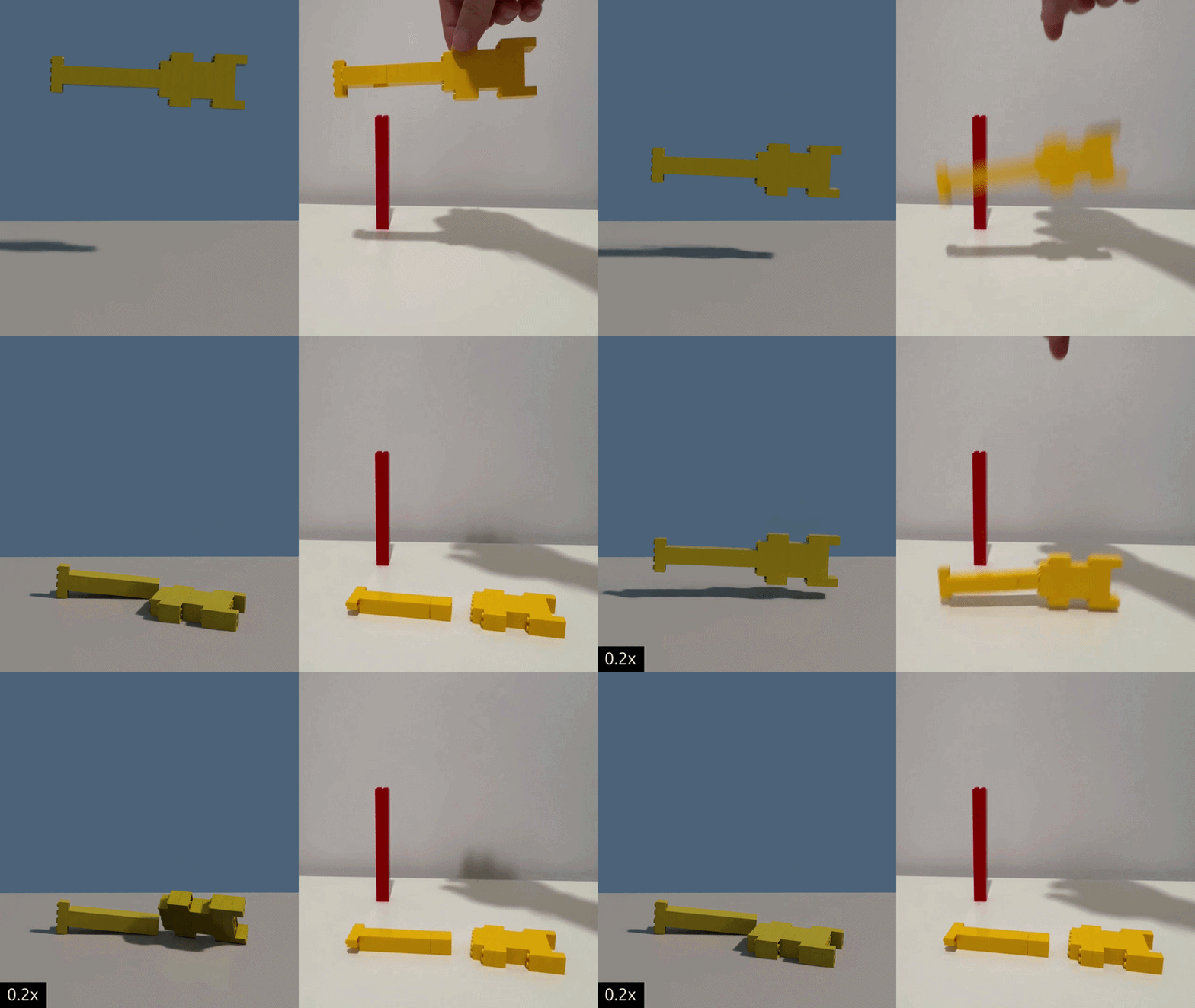
-
[U] BrickSim: A Physics-Based Simulator for Manipulating Interlocking Brick Assemblies
Haowei Wen, Ruixuan Liu, Weiyi Piao, Siyu Li and Changliu Liu
arXiv:2603.16853, 2026
BrickSim models the physics of interlocking bricks in real time, enabling high-fidelity simulation of assembly, disassembly, and structural collapse.
Generative Design
Can Physical AI turn creative intent into original, build-ready designs?
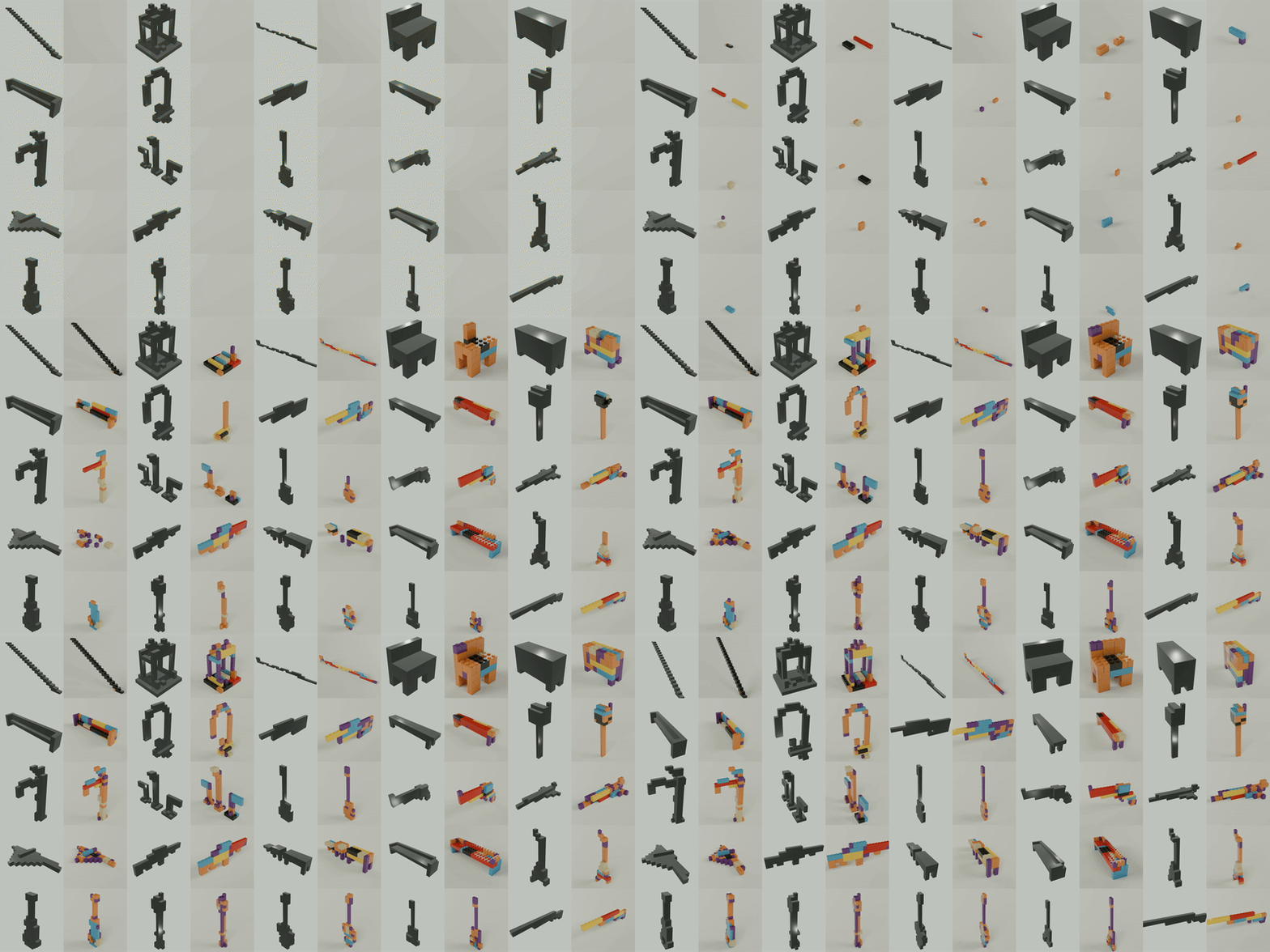
We translate human intent into creative, customized structures that are physically viable and ready for assembly.
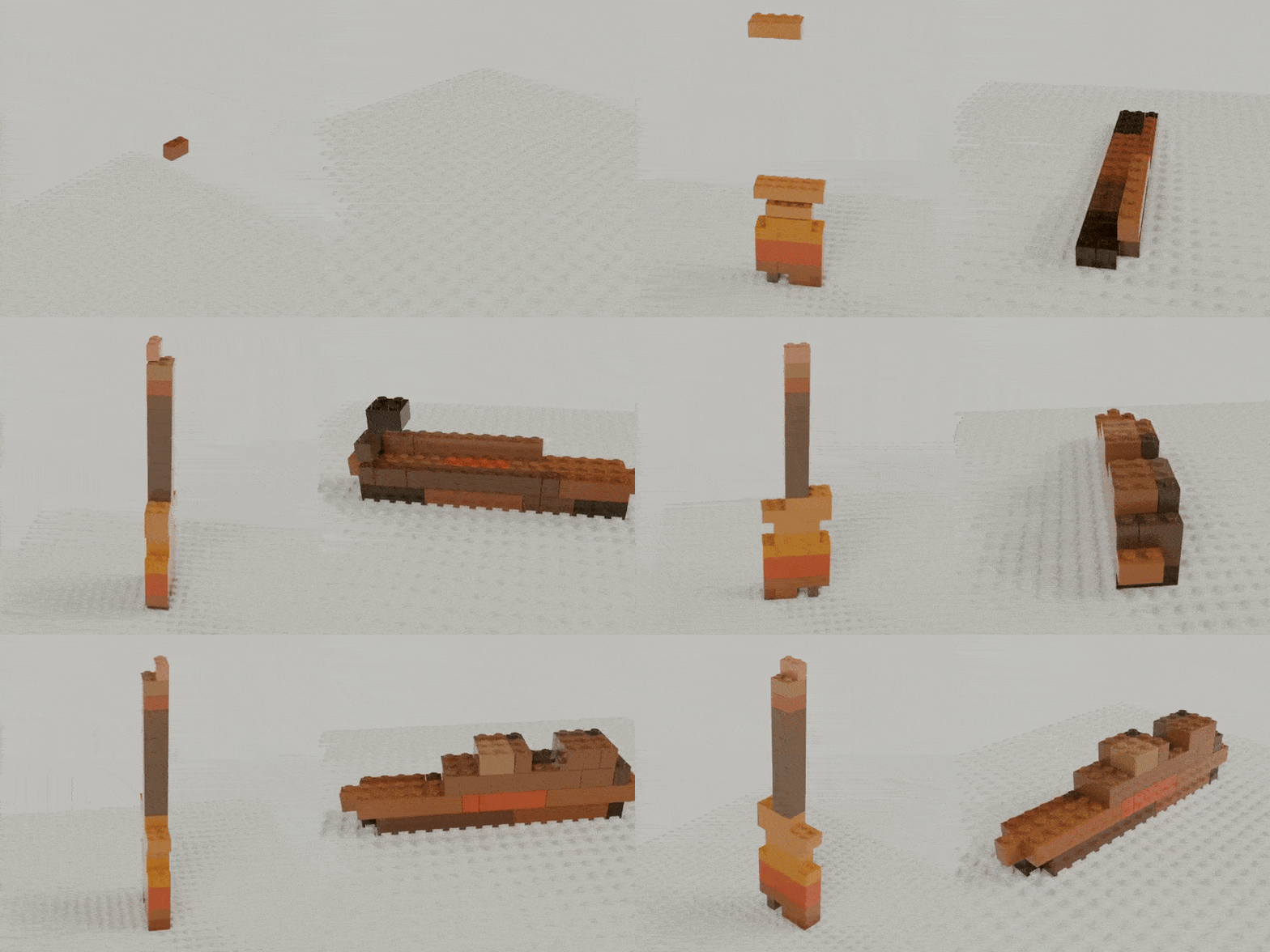
-
[C106] Generating Physically Stable and Buildable Brick Structures from Text
Ava Pun, Kangle Deng, Ruixuan Liu, Deva Ramanan, Changliu Liu and Jun-Yan Zhu
International Conference on Computer Vision, 2025
Best Paper Award (Marr Prize)

BrickGPT turns natural-language prompts into diverse brick structures that are stable, buildable, and ready to assemble.

-
[U] Simulation-aided Learning from Demonstration for Robotic LEGO Construction
Ruixuan Liu, Alan Chen, Xusheng Luo and Changliu Liu
arXiv:2309.11010, 2023

Simulation-aided learning converts human demonstrations into reusable construction policies for new designs.
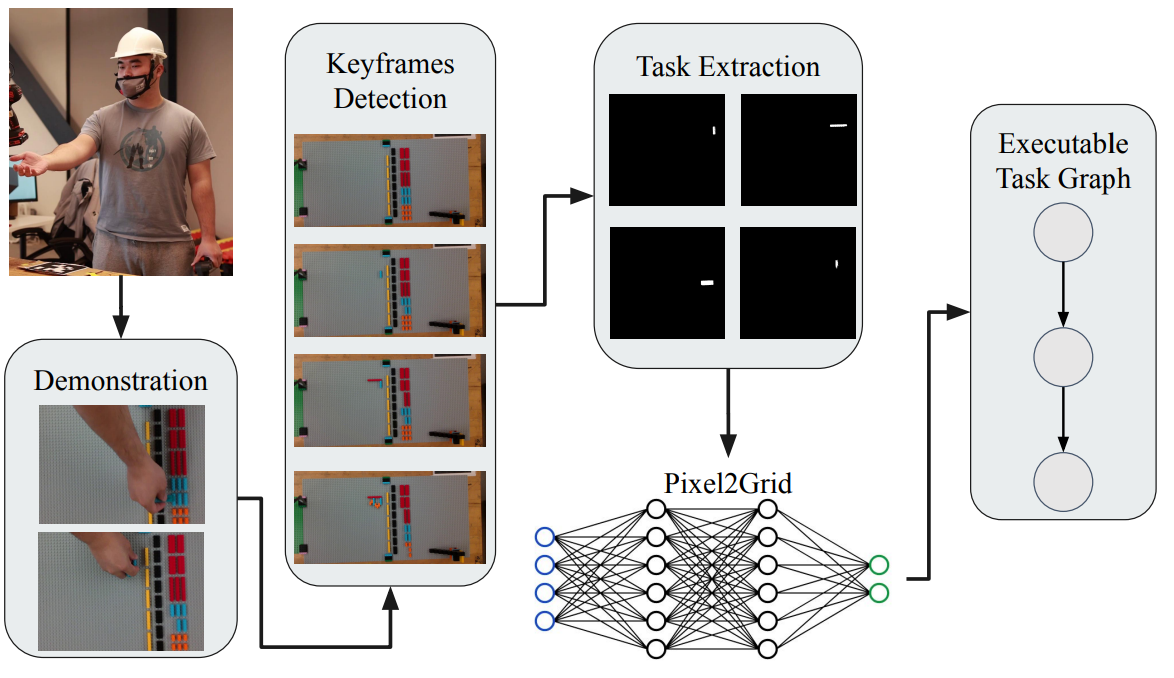
-
[W] Robotic LEGO Assembly and Disassembly from Human Demonstration
Ruixuan Liu, Yifan Sun and Changliu Liu
ACC Workshop on Recent Advancement of Human Autonomy Interaction and Integration, 2023
This framework learns assembly and disassembly directly from human demonstrations, then transfers those skills to robots.
Robotic Manipulation
Can Physical AI manipulate small components with submillimeter precision?
We combine purpose-built hardware and innovative software to make assembly precise and reliable.
-
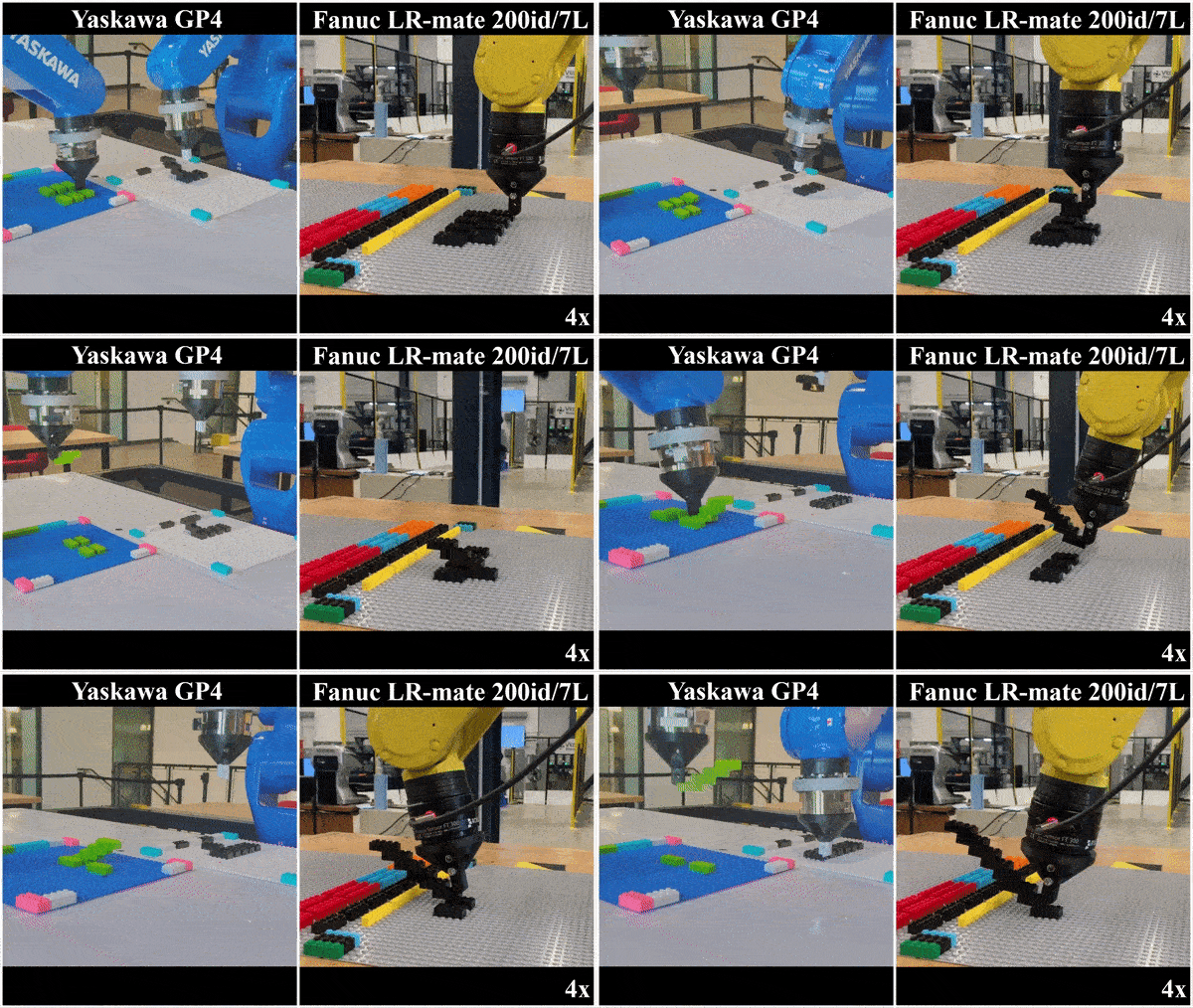
[C76] A Lightweight and Transferable Design for Robust LEGO Manipulation
Ruixuan Liu, Yifan Sun and Changliu Liu
International Symposium of Flexible Automation, 2024

A lightweight, low-cost end effector delivers robust assembly and disassembly across robot platforms.
-
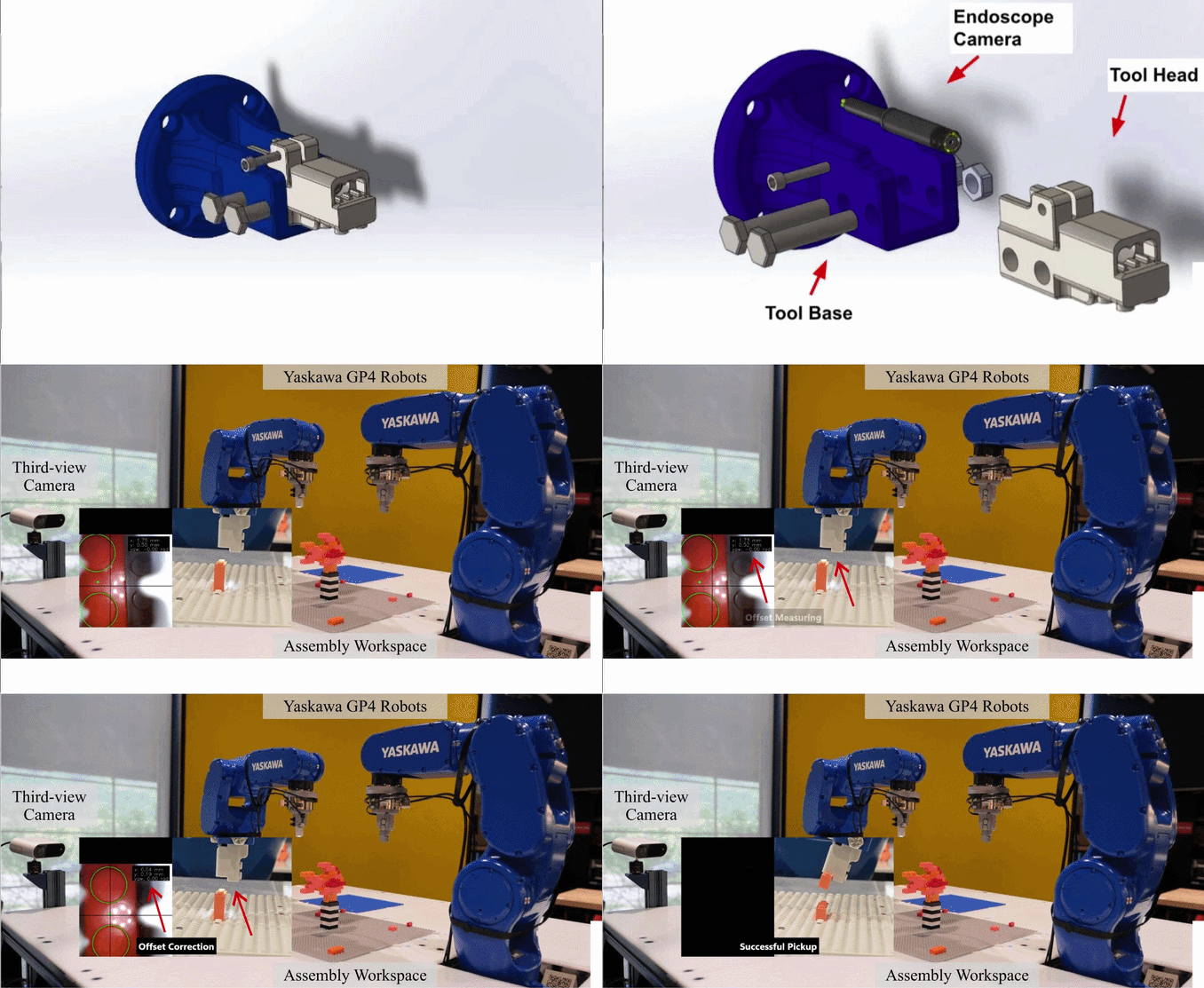
[C103] Eye-in-Finger: Smart Fingers for Delicate Assembly and Disassembly of LEGO
Zhenran Tang, Ruixuan Liu and Changliu Liu
IEEE/RSJ International Conference on Intelligent Robots and Systems, 2025
Eye-in-Finger places close-range vision at the tool tip for reliable submillimeter manipulation.
-
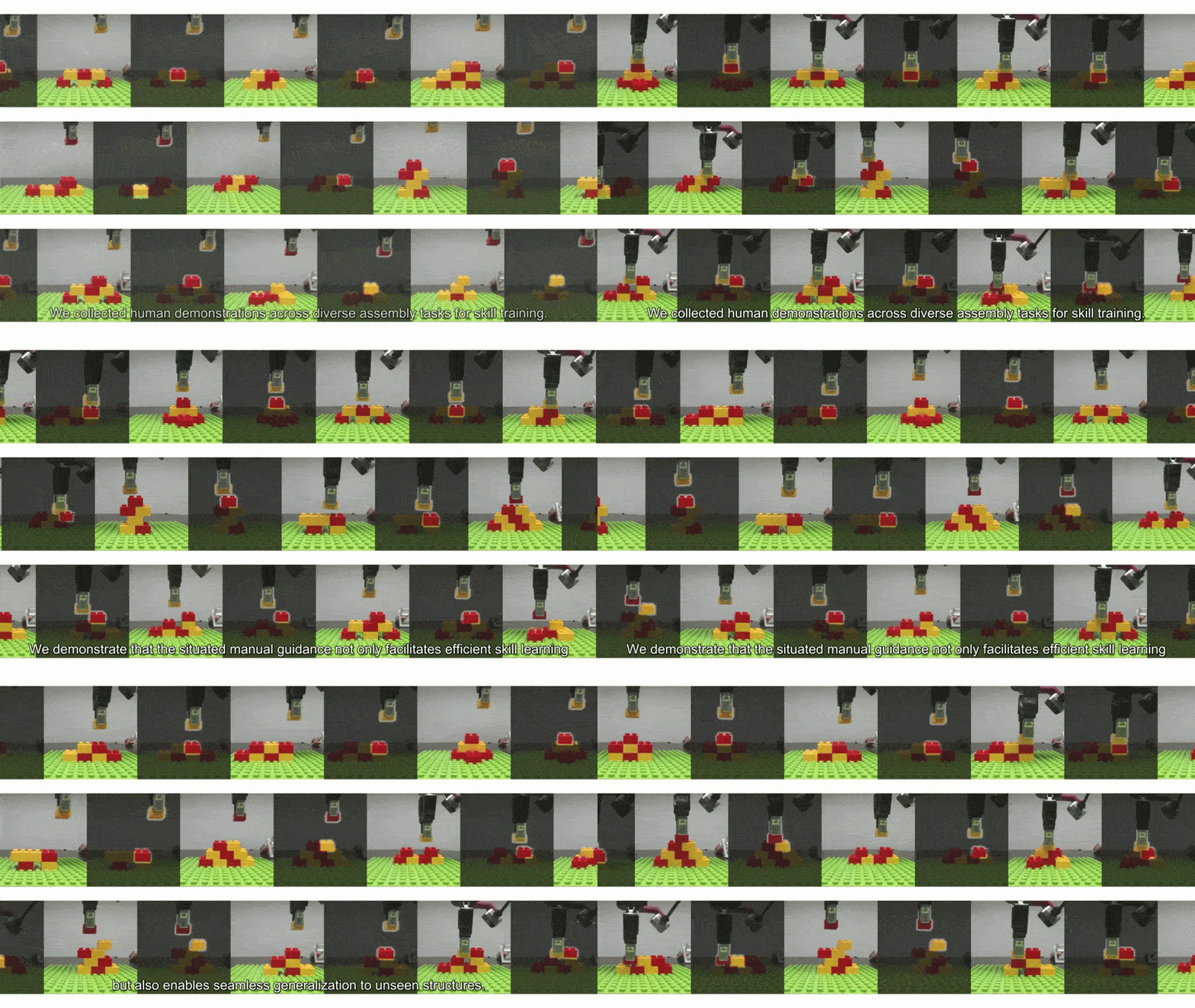
[U] BrickCraft: Visuomotor Skill Composition with Situated Manual Guidance for Long-Horizon Interlocking Brick Assembly
Jichuan Yu, Bowei Li, Zhenran Tang, Guanxing Lu, Chuxiong Hu, Ruixuan Liu and Changliu Liu
arXiv:2605.07605, 2026
BrickCraft grounds and composes visuomotor skills from situated manuals, enabling robots to generalize to unseen assemblies.
Task Reasoning
Can Physical AI coordinate robots across hundreds of interdependent actions?
We develop physics-aware planners and coordination strategies that turn complex designs into safe, efficient, long-horizon robot execution.
-
[J29] Physics-Aware Combinatorial Assembly Sequence Planning using Data-free Action Masking
Ruixuan Liu, Alan Chen, Weiye Zhao and Changliu Liu
IEEE Robotics and Automation Letters, 2025

Physics-aware action masking steers learning toward safe, executable sequences for complex assemblies.
-
[C96] APEX-MR: Multi-Robot Asynchronous Planning and Execution for Cooperative Assembly
Philip Huang, Ruixuan Liu, Shobhit Aggarwal, Changliu Liu and Jiaoyang Li
Robotics: Science and Systems, 2025

APEX-MR coordinates multiple robots asynchronously for safe, efficient, long-horizon assembly.
Failure Recovery
Can Physical AI detect, diagnose, and recover from failures before they cascade?
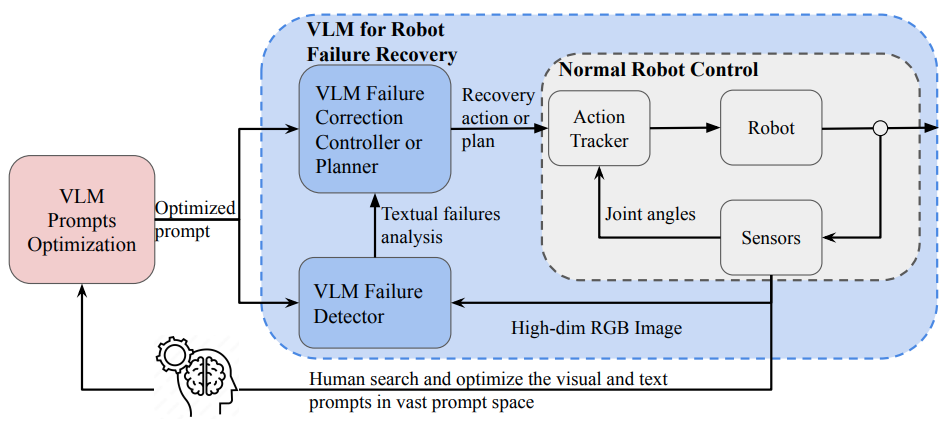
We fuse multimodal perception with foundation models to monitor execution, diagnose failures, and recover before errors cascade.
-
[C87] Automating Robot Failure Recovery Using Vision-Language Models With Optimized Prompts
Hongyi Chen, Yunchao Yao, Ruixuan Liu, Changliu Liu and Jeffrey Ichnowski
American Control Conference, 2025
Optimized visual and language prompts enable vision-language models to detect failures, diagnose causes, and propose recovery actions.
EXPLORE MORE
Demos, events, and more
Experiment with our tools, explore generated designs, and connect with the creative robotics community.
Build and Explore
Challenges and Events
Explore the challenge tracks, participation details, results, and latest competition updates.
Visit the challenge Opens in a new tab Creativity in Assembly Workshop @ IROS 2026Discover research and discussions at the intersection of creativity, intelligence, and robotic assembly.
Visit the workshop Opens in a new tabStudent opportunities
Interested in working on Prompt-to-Product?
We welcome students interested in generative intelligence, physics-aware world models, long-horizon planning, robot learning, robotic manipulation, and simulation. Prospective researchers should identify the area that best matches their interests and contact us with a brief description of their background and goals.
Research portfolio